


Find YOUR path
Progressive Access
By considering the full spectrum of disability and outdoor recreation activities, we can gradually build capacity for health and adventure!

Outdoor recreation can close longstanding gaps in health and quality of life for those with disabilities. Read more.
Defines sources of Trail Stress that challenge the capacities of people, depending on their disability. Read more.

Spectrum of disability: No two people are alike and abilities can evolve over time. Read more.

Simple, reliable, meaning-ful & evolving scales help walkers find the trail right for them. Read more.

Spectrum of access: Identifying when and how a barrier might be over- come can open so many doors. Read more.

Helps meet goals for health & quality of life using our research-based Progressive Access framework. Read more.

Separates Effort from Stress to help people with disabilities get fit on paved paths before trying natural trails. Read more.

Helps park managers and funders prioritize trail & other improvements to increase access. Read more.
Outdoor recreation can close critical, longstanding gaps in the health and quality of life for people with disabilities

Activities like kayaking became adventures around which we could finally organize family holidays.
CHallenges to find fun thnigs to do
to get moveoemnt
To do things wiyh others
The have adventures
Outdoor rec can do it all
Hiking, biking, skiing, paddling, and so on
Adaptve outdoor rec - when we adaptove these activities to work fpr people with disabilities. Progressive access integrates the critical elemtns to make this happen
See the evolution of Margot's adventures HERE
Disability is a spectrum and this can change with increased fitness, strength, skills, and confidence
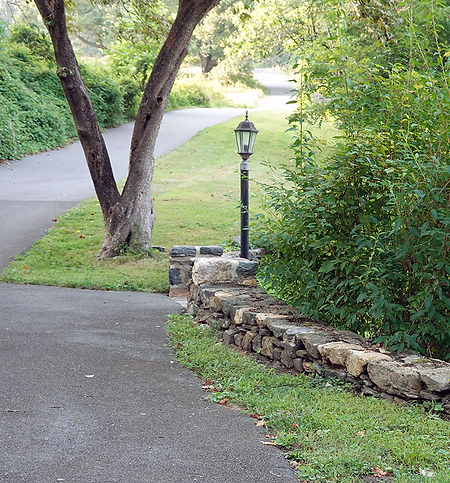
We know that Margot will take longer to walk the Oversee Farm Trail compared to a flat path of the same length, because of the grades
Read more about Trail Effort HERE
-
People with disabilities like Margot have different levels of skills and confidence, depending on their particular disability.
-
Disabiities are not immutable - exp in spec ed
Person characteristics
Fitness
Skills required are going to vary greatly from one activity to another
Confidence
The level of fitness required to complete a walk - the Trail Effort - is determined by the
-
Length of the walk, and
-
Any slopes (Running Grades) users encounter (ratings of Running Grade are detailed elsewhere)
Why focus first on Trail Effort?
-
It can be reliably predicted (e.g., a trail that is twice as long likely takes twice the effort to complete).
-
It probably does not vary as much in people with disabilities (e.g., a trail that is twice as long will be twice as hard for anyone regardless of disability)
-
We can confidently set goals to increase fitness by choosing trails based on their length and (to a less degree) on the types of Running Grades.
We know that Margot will take longer to walk the Oversee Farm Trail compared to a flat path of the same length, because of the grades
Read more about Trail Effort HERE
-
Strength
-
Fitnesss
-
Skills required are going to vary greatly from one activity to another
-
Confidence
The level of fitness required to complete a walk - the Trail Effort - is determined by the
-
Length of the walk, and
-
Any slopes (Running Grades) users encounter (ratings of Running Grade are detailed elsewhere)
Why focus first on Trail Effort?
-
It can be reliably predicted (e.g., a trail that is twice as long likely takes twice the effort to complete).
-
It probably does not vary as much in people with disabilities (e.g., a trail that is twice as long will be twice as hard for anyone regardless of disability)
-
We can confidently set goals to increase fitness by choosing trails based on their length and (to a less degree) on the types of Running Grades.
Understanding when and how a barrier might be overcome can open up so many opportunities
We know that Margot will take longer to walk the Oversee Farm Trail compared to a flat path of the same length, because of the grades
facilities are not simply accessible or inaccessible -
Barriers versus stressors
Read more about Trail Effort HERE
Effort and Stress ratings help people with disabilities achieve Goals related to Health and Quality of Life for successful walks year-round, when considered together with other elements of our Progressive Access framework...How?
-
Disability is not immutable: fitness, skills, and confidence grows with experience, allowing us to set Goals to explore a greater range of paths and trails.
-
We build the skills and confidence to reach ouby also considering these other elements - Accommodations, Supports, Interests, and Other Conditions.
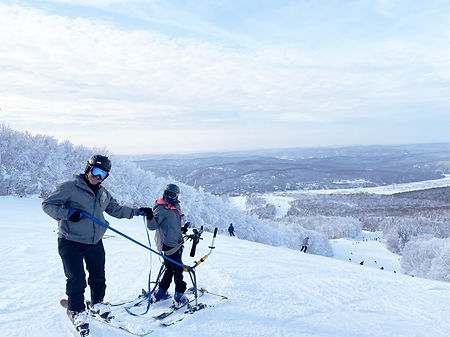
I honed the model of Progressive Access while teaching Margot how to ski with me.
ASCENT captures the Stress and Barriers that people with disabilities experience on natural trails
Trail Stress is the discomfort we experience or barriers we encounter while walking a natural trail. The amount of stress depends our capacity and confidence to navigate specific features that vary significantly across trails - e.g., Cross-Grades, Width, Surface, Obstacles, and steeper Running Grades.
-
Our capacity will vary depending on the nature of our disability, and the strength and skills we have developed to compensate
-
Our confidence will depend on the positive experiences we have had walking similar trails
A Trail Barrier is a feature that a person with a disability cannot overcome, or only with great difficulty (see right)
-
Example: A wheelchair user faced with stairs.
-
Barriers prevent a person from continuing their walk.

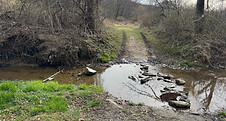
Margot will not want to hike if her feet are wet, so this stream crossing on the Lower Octararo Trail at Glenroy Preserve becomes a barrier
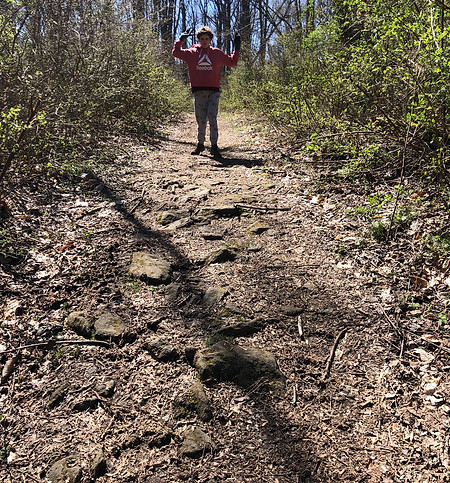
Margot can navigate rocks and roots, like these on Flint Hill Preserve. But these obstacles (rated A-) increase her stress and slow her down.
A Trail Stressor is a feature that a person with a disability finds difficult but not impossible to navigate (see left)
-
Example: 3" high rocks that a person with low vision must take care to step around and not trip on.
-
Stressors make a walk less comfortable; enough may make a walk so uncomfortable that someone with a disability does not complete it or never returns to it.
By characterizing some trail features as stressors, and by recognizing the strength and skills needed to navigate them, we begin to see how some people with disabilities may set goals to build their capacity to walk trails that are technically inaccessible (e.g., exceed UA standards).
Read more about Trail Stress HERE

Trails in Stateline Woods vary in terms of types and levels of stress, allowing Margot to choose one that can build her capacity without too much stress
ASCENT helps each person to find the trail just right for them
-
Separate ratings for each feature (Cross- & Running Grade, Width, Surface, and Obstacles), help each person identify which feature(s) they find stressful
-
Carefully graded stress levels - A-, B, and C - within each feature help each person choose a difficulty level that matches their current capacity and confidence
Teaching Strategies
- General
- Specific to activity

Building Skills
I know to lower expectations based on
-
Weather: More challenging conditions indicate the need to be more conservation in what we can do.
-
Mood: I change expectations on the fly by constantly monitoring Margot's energy and affect

Supports can decrease stress
Choosing the right support can help a person with disabilities be more comfortable while still challenging them to build skills and confidence
-
People: A helper can offer an arm to lean on while navigating obstacles
-
Equipment: A walking stick can offer support while still challenging the person to build skills

Margot's snow slider gives support but allows her to lean into turns and shift her skis

A key accommodation when skiing is ensuring that staff give us time to get on the chairlift or gondola.
Accommodations in the choice of facilities and procedures make a BIG difference
These are widely used but under-appreciated strategies for anticipating stressors and increasing comfort.
-
Time: Allowing more time to complete a walk, or choosing a time when a park is less crowded or your hiker has more energy.
-
Facilities: Selecting a shaded trail on a hot day, or one that includes benches for breaks
-
Procedures: Building in breaks for snacks or bathroom access.

Margot LOVES to go fast, so a run that allows us to safely get more speed can counter other stressors.
Tapping into Interests to increase motivation
I can more comfortably increase the challenge when I know this experience will be interesting because it
-
Uses a familiar path: A familiar trail makes everything easier!
-
Builds on familiar routines: Changes in the overall routine (getting to and from the starting point, etc.) can sometimes increase overall stress.
-
Brings us to a favorite kind of place: For Margot, a walk that brings us to a stream is always preferred, especially if she can play in the water
-
Offer a favorite experience: Margot loves feeling the wind in her hair, and will always put up with more if she can get a bit of speed!!
Adjusting expectations based on Other Conditions
I know to lower expectations based on
-
Weather: More challenging conditions indicate the need to be more conservation in what we can do.
-
Mood: I change expectations on the fly by constantly monitoring Margot's energy and affect

I know that I have more flexibility to try new runs or extend the day when I see Margot is in great mood!
Building in routines - General
- Specific to activity